

Modern Hebrew
 1
4.9

- proper noun
- /ˈmɒdərn ˈhiːbruː/
- Modern Hebrew has incorporated words from many different languages.
Examples
-
She studied Modern Hebrew at university as part of her linguistics degree.
-
Have you ever studied Modern Hebrew?
-
Many immigrants to Israel learn Modern Hebrew to communicate in their new country.
-
I am learning Modern Hebrew at university.
-
In her language class, she learned to speak Modern Hebrew with confidence.
-
Many tourists find it helpful to learn some basic Modern Hebrew before visiting Israel.
-
He enjoys reading literature written in Modern Hebrew as it reflects contemporary Israeli culture.
Synonyms
 58
6.0
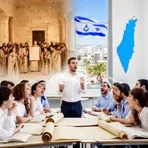
An ancient language now used as the modern language of Israel
 2
4.6
A language first used by ancient Jewish people, now the main language of Israel
Surface Forms
Morphology
The phrase 'Modern Hebrew' is compositionally transparent: 'modern' simply qualifies 'Hebrew' to indicate the contemporary form of the language, so a learner who knows both words can infer it refers to the current/revived standard. This adjective+noun pattern is cross-linguistically common and follows straightforward English compounding, making the meaning accessible to a B1 learner.
Etymology
Modern Hebrew comes from a time when ancient Hebrew was mostly used in books and prayers, and then people in the 1800s and 1900s brought it back as a language for everyday life. That's why Modern Hebrew now means 'the Hebrew spoken and written in Israel today'.